

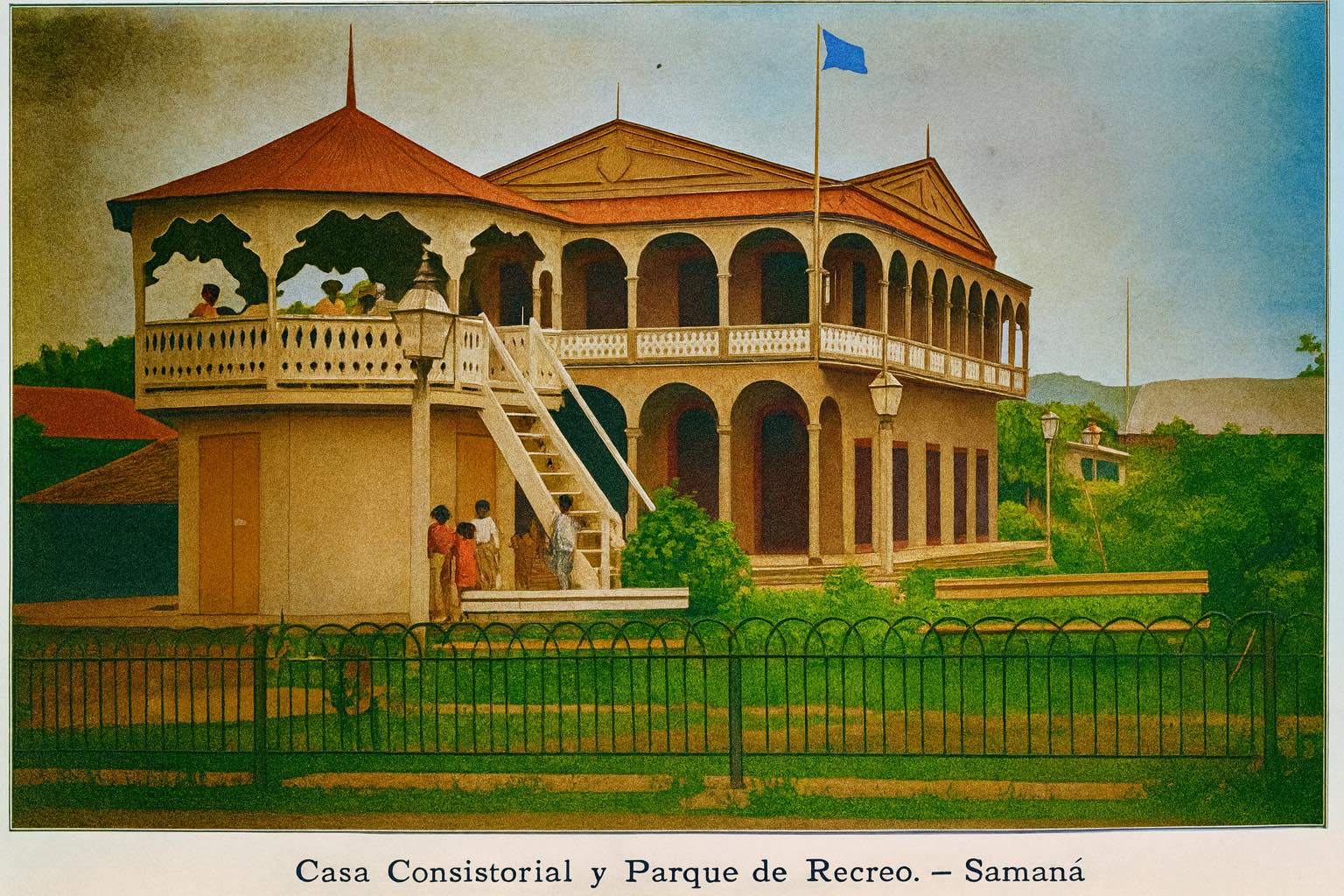
The Casa Consistorial of Samaná was far more than just an old building; it was the absolute center of local power. This was the hall where the decisions that shaped the town’s destiny were made.
A New Provincial Status
By this time, Samaná had transitioned from being a “Maritime District” to holding the full rank of a Province. This elevation in status solidified its political and administrative importance in the region. With this new rank, the Casa Consistorial became an even more strategic hub for local governance.
The Heart of Municipal Government
The building served as what we know today as the Samaná City Hall (Ayuntamiento). Inside its walls:
The Síndico: The highest municipal authority of the time dispatched from here.
The Sala Capitular: Regidores (council members) gathered here to debate and approve the most critical measures for the municipality’s development.
Justice and Law: Essential state functions operated here, including local justice departments—most likely a Justice of the Peace court—where community conflicts were resolved and legal order was maintained.
A Strategic Command Post
Everything passed through the Casa Consistorial. From this single building, the government:
Organized public order.
Supervised local commerce.
Controlled the vital operations of the port.
Managed the crucial daily affairs of the municipality.
In eras marked by political tension and strong historical figures—such as the time of Desiderio Arias—this building represented command, strategy, and authority. The actions decided within its halls influenced the entire region.
A Living Symbol
Today, the Casa Consistorial is not merely a historical structure; it is a living symbol of the place where Samaná was governed. It is the site where the town’s destiny was built and where, for decades, the political and social pulse of the people beat strongest.