

Frederick Douglass, one of the most influential African American leaders of the 19th century, is widely remembered as an abolitionist, writer, orator, and statesman. Less commonly known, however, is his important connection to the Dominican Republic and the Samaná Peninsula during a pivotal moment in Caribbean and U.S. history.
The Context: Santo Domingo and Samaná in the 19th Century
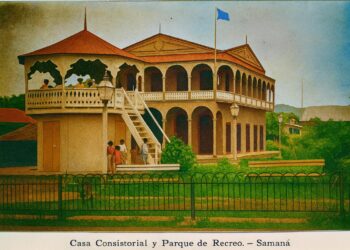
In the late 1800s, the Dominican Republic—then often referred to internationally as Santo Domingo—attracted significant attention from the United States. The Samaná Peninsula, in particular, was viewed as strategically valuable due to its deep harbor and geographic position in the Caribbean.
At the same time, many African Americans were exploring ideas of migration, self-determination, and international opportunities following the Civil War. Samaná already had a unique history, having welcomed free Black settlers from the United States earlier in the century.
Frederick Douglass’s Role and Visit (1871)
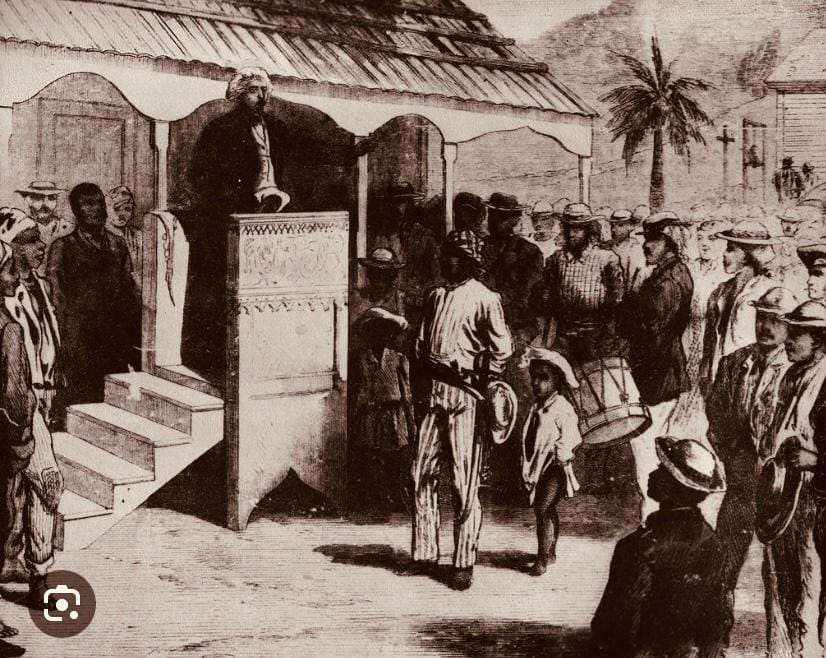
In 1871, Frederick Douglass was appointed by U.S. President Ulysses S. Grant as a member of the U.S. Commission of Inquiry to Santo Domingo. The commission’s mission was to study the political, economic, and social conditions of the country and to evaluate a proposed annexation of Santo Domingo by the United States.
Douglass traveled with the commission to the island, observing conditions firsthand and engaging with local leaders and communities. Although his visit was not limited solely to Samaná, the peninsula was a central focus of U.S. interest at the time.
Douglass’s Perspective
Frederick Douglass approached the mission with seriousness and independence. He viewed the Dominican Republic—especially regions like Samaná—as a place with potential for Black self-governance, dignity, and opportunity, but he was also cautious about imperial ambitions.
Unlike some members of the commission, Douglass emphasized:
- The rights and sovereignty of the Dominican people
- The importance of consent, not coercion
- The dangers of racial prejudice being exported abroad
His reports and speeches reflected a deep respect for the island’s population and a nuanced understanding of international politics.
Why Samaná Mattered
Samaná was significant for several reasons:
- It already had a strong Afro-descendant presence, including descendants of free Black Americans
- Its natural harbor made it strategically important
- It symbolized the broader Black Atlantic connection between the Caribbean and the United States
Douglass understood that Samaná was more than a geopolitical asset—it was a living community with history, culture, and identity.
The Outcome and Legacy
Ultimately, the annexation treaty failed in the U.S. Senate, and Santo Domingo remained independent. Still, Frederick Douglass’s involvement left a lasting historical footprint.
His visit represents:
- An early example of Black diplomatic leadership
- A connection between African American history and Dominican history
- A reminder that Samaná has long played a role on the international stage
A Shared Historical Heritage
Today, Frederick Douglass’s connection to the Dominican Republic and Samaná adds depth to the peninsula’s rich cultural story. It highlights Samaná as a place of global significance—where freedom, identity, and international dialogue once intersected.
Remembering this chapter helps us better understand Samaná not just as a beautiful destination, but as a land deeply rooted in history, resilience, and cross-cultural exchange.