

The True Founders of the Peninsula
Long before the sails of Spanish ships appeared on the horizon, the Samaná Peninsula was already home to a thriving civilization: the Ciguayos.
Unlike many other groups in the Caribbean at the time, the Ciguayos possessed a unique language and a fierce, independent political structure. They weren’t just inhabitants; they were the architects of Samaná’s original identity.
January 13, 1493: The Battle of the Gulf of the Arrow
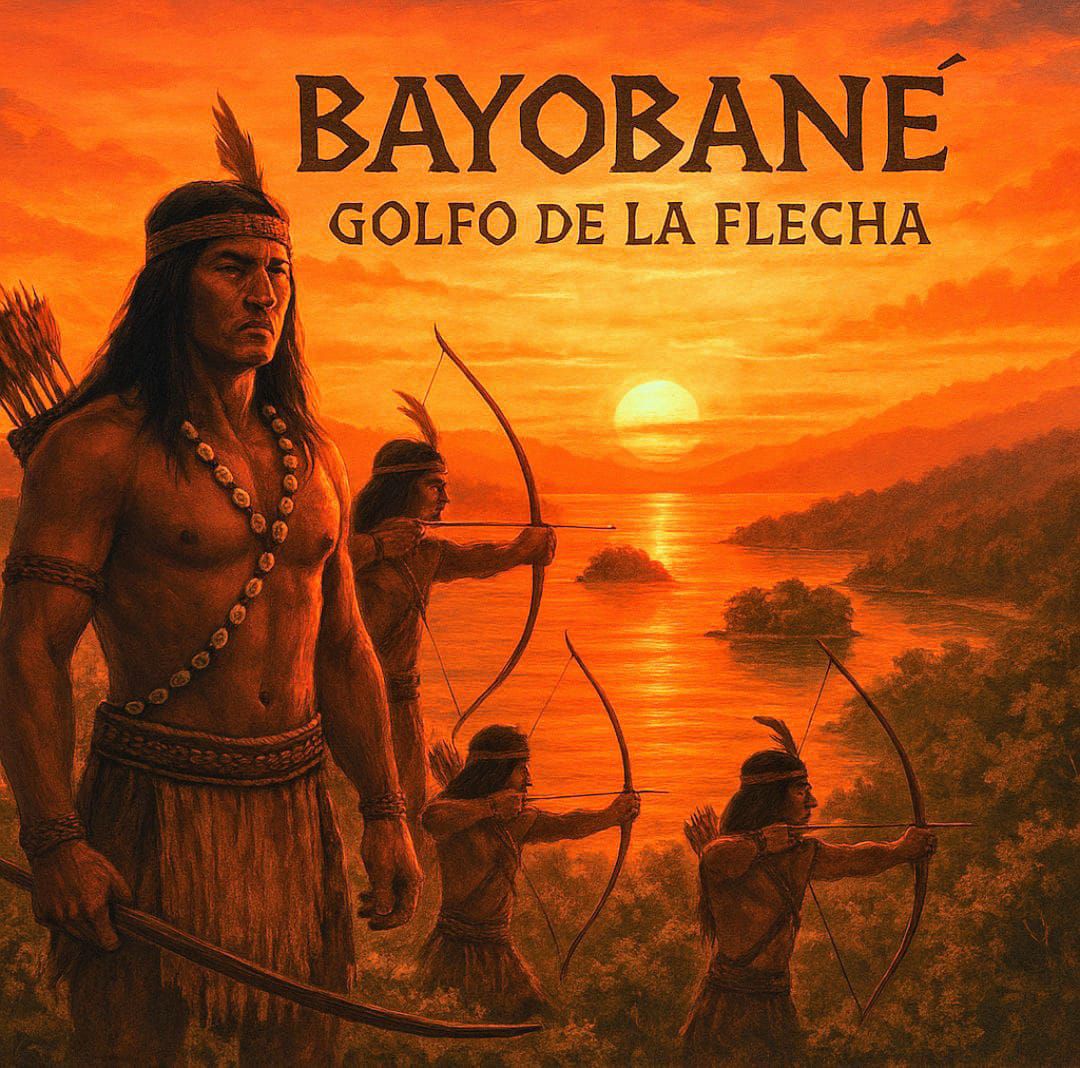
When Christopher Columbus anchored in the bay today known as the Golfo de la Flecha, he didn’t find a submissive population. He was met by Bayobanéx, the great Cacique and the first true governor of these shores.
History often glosses over the fact that the only indigenous battle of Columbus’s first voyage happened right here. It wasn’t a skirmish—it was a stand for dignity. The Ciguayos fought with a resolve that proved Samaná would never be taken without a fight.
Betrayal in the Shadows
The story of Bayobanéx is one of courage, but also of treachery. Following the battle, the Cacique sought refuge in the caves of Arroyo Seco. In a desperate move to capture him, Columbus had his soldiers disguise themselves as indigenous people to bypass Bayobanéx’s defenses.
The ruse worked. Bayobanéx was captured and taken aboard a Spanish vessel. From that moment, his fate becomes a mystery—some say he was executed, others that he was tortured, but his trail vanishes into the dark pages of colonial history.
Keeping the Flame Alive
Today, Samaná refuses to let his name be forgotten. Under an official resolution for Educational District 1404, January 13 is now a day of remembrance.
Every year, students leave their classrooms and travel to the actual grounds of La Flecha. Standing where their ancestors fought, they learn that Samanesian identity isn’t just about the beauty of the landscape—it’s about the unbreakable spirit of the people who first defended it.