

Testimony of Rosy Azor
 Hello, my dear people. I am Rosy Azor, and today it is my pleasure to address the customs of our town. I truly appreciate this space to share with you and remember our beloved La Docha, a traditional dance from Samaná—and especially from our community—that is part of the DNA of our rich folklore. I speak in the past tense because, unfortunately, we are losing this tradition.
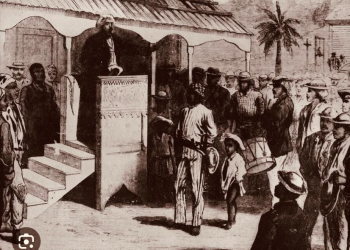
La Docha is an exotic tradition of dance and song used to celebrate marriages, especially in rural areas of Samaná such as Honduras, Los Algarrobos, Majagualito, Juana Vicenta, Monte Rojo, Villa Clara, Los Cacaos, and Las Terrenas, among others. It is a legacy from our beloved ancestors: the families of immigrants and freedmen from the United States who arrived in Samaná in 1824.
The Celebration
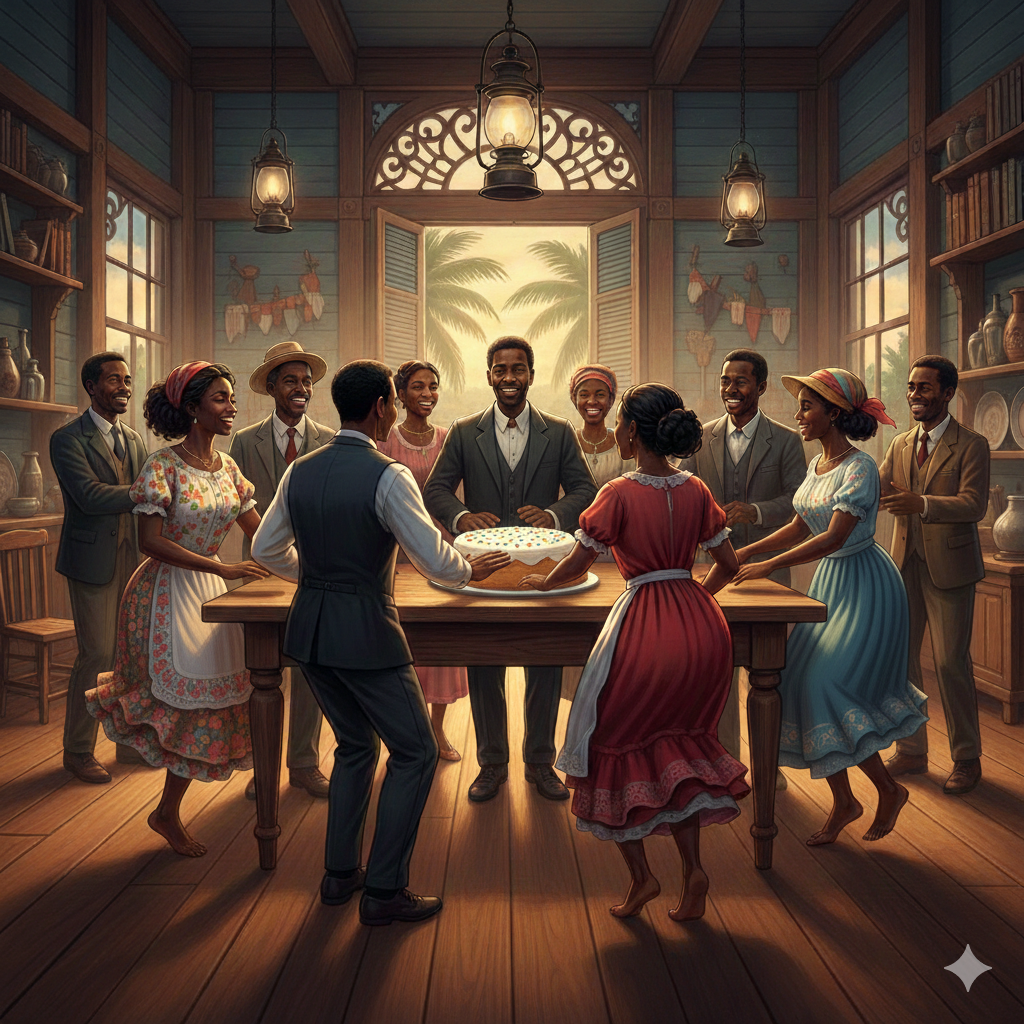
This tradition was organized with great care by the family, friends, or neighbors of the couple. The entire party took place around a very special table, where a group of people would harmoniously improvise rhythms, melodies, and songs alluding to the marriage and the newlyweds.
They used the table as a drum, where the instruments were nothing more and nothing less than their own hands striking the wood. Likewise, couples would form to dance and jump in a circle around the table to the rhythm of the best and most exquisite musical improvisation imaginable.
The excitement for “jumping the Docha” was so great that an organizer was assigned to borrow the best houses with wooden floors. This was done to create harmony between the strikes on the table and the sound of the floor caused by the participants’ jumps.
Unforgettable Moments
In the middle of the night, and from a distance, you could hear the choruses of the crowd shouting:
“Long live the bride, long live! Long live the groom, long live! Long live the godmother and the godfather!”
They were definitely unique and unforgettable moments where we all blessed that union.
Each “Docha” had its own anecdotes. With this tradition, a Ladies’ Night wasn’t necessary; for the couple’s send-off, we would “jump the Docha,” and the duration was up to us: we could go for five or six consecutive nights before the wedding. The party only ended when we broke the table.
A Legacy Worth Saving
Proof that we enjoyed it to the fullest is that on the wedding day itself, after the Christian celebration, we would also jump it. It was a healthy custom—very healthy—where we celebrated love by asking God for the best wishes, enjoying ourselves as a sister community, and expressing values of empathy, solidarity, humility, and gratitude.
In Samaná, music and song are in our blood; they are present in our celebrations as well as our saddest moments. It is part of the richness of our ancestors. As a community, we need to empower ourselves to rescue and maintain our traditions from generation to generation. We need to identify what actions will allow us to save this legacy.
It pains me to admit that there are almost no bibliographic references regarding La Docha. What I have just shared is part of my memories of a tradition that I enjoyed passionately. Thank you very much for your attention, and I am sure that many in this group have anecdotes to share about our beloved Docha.