

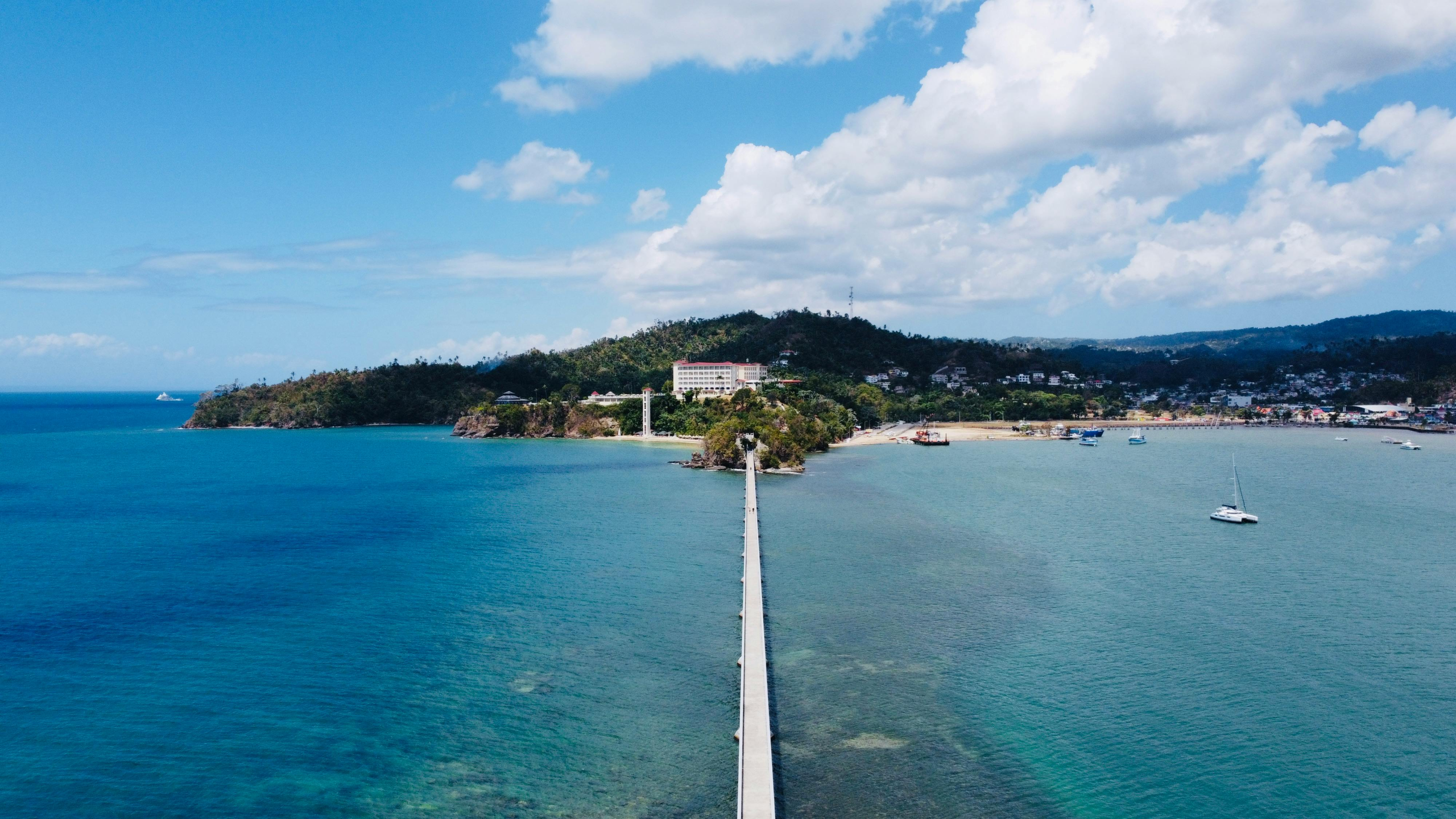
Imagine standing in the middle of a turquoise bay, surrounded by lush green hills, with nothing but a narrow concrete ribbon stretching out beneath your feet. The salt breeze whips through your hair, and below, the water is so clear you might spot a turtle gliding by. This isn’t a fantasy; it’s a Tuesday afternoon on El Puente de Samaná.
Locally known simply as “The Bridges” or Los Puentes, this architectural marvel is more than just a pathway. It is a striking symbol of the Samaná Peninsula in the Dominican Republic. While many tourists flock to Punta Cana for resorts, those seeking soul, history, and raw beauty head north to Samaná.
In this guide, we’ll explore the fascinating history behind these bridges, the incredible nature that surrounds them, and everything you need to know to experience this walk over the sea for yourself.
A Bridge to Nowhere (and Everywhere)
The structure is officially named the pedestrian bridge to Cayo Vigía, but everyone calls it El Puente de Samaná. It connects the town of Santa Bárbara de Samaná to two small cays (islands) in the bay: Cayo Linares and Cayo Vigía.
What makes it visually stunning is its design. It isn’t a straight line. The bridge curves and undulates, connecting the mainland to the islands with a series of arches and flat stretches. It looks almost like a spine resting on the water.
A Controversial Beginning
The bridge has a curious history tied to Dominican politics. It was commissioned in the late 1960s and early 1970s by then-President Joaquín Balaguer. Balaguer was known for his massive infrastructure projects, often built to modernize the country and leave a lasting legacy.
However, for decades, the bridge was known as the “Bridge to Nowhere.” Why? Because for a long time, the islands it connected to were undeveloped and largely inaccessible. The bridge fell into disrepair, its concrete crumbling into the bay. It stood as a ghostly skeleton in the harbor.
Thankfully, that changed recently. A major restoration project revitalized the structure, painting it a fresh, welcoming beige and reinforcing the walkways. Today, it stands as a proud emblem of the town, fully accessible and safe for everyone from jogging locals to curious travelers.
The Walk: What to Expect
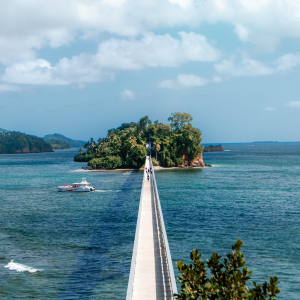
The experience of walking El Puente de Samaná is distinct because of the perspective shift. Usually, you look at the ocean from the shore. Here, you are in the middle of it.
The Route
The journey starts right on the Malecon (boardwalk) of Santa Bárbara de Samaná. The entire walkway spans about 1.3 kilometers (roughly 0.8 miles) round trip if you walk all the way to the end of Cayo Vigía and back.
- The First Leg: You leave the mainland and head toward Cayo Linares. This first cay is smaller and mostly serves as a stepping stone.
- The Second Leg: This is the most photogenic section. The bridge stretches longer here, connecting Linares to the larger Cayo Vigía. This is where you get those panoramic views of the sailboats anchored in the marina.
- Cayo Vigía: The destination. Once you reach this island, you are greeted by dense vegetation, sandy paths, and a small beach area. It feels miles away from the busy town you just left.
Nature Around You
As you walk, keep your eyes peeled. The Bay of Samaná is a sanctuary for marine life. While the famous Humpback Whales usually stick to deeper waters further out (visiting between January and March), the bay itself is teeming with life.
- Birdwatching: Frigatebirds and pelicans are constant companions, diving for fish near the bridge pilings.
- Marine Life: The water is shallow near the cays. Look down to see starfish, schools of tropical fish, and occasionally rays swimming in the shadows of the bridge.
- Flora: Cayo Vigía is a mini botanical garden. You will find sea grapes, coconut palms, and local wildflowers thriving in the salty air.
Practical Tips for Your Visit
Visiting El Puente is free and open to the public, making it one of the best budget-friendly activities in the Dominican Republic. Here is how to make the most of it.
Best Time to Visit
The Caribbean sun can be intense. The bridge offers zero shade until you reach the islands.
- Sunrise: This is the magical hour. The air is cool, the town is quiet, and the sun rising over the bay paints the sky in purples and oranges. It’s perfect for photographers.
- Late Afternoon: Around 5:00 PM, the heat breaks. You’ll join locals taking their evening paseo (stroll). The sunset views looking back toward the town and the hills are spectacular.
- Avoid Mid-day: Walking the bridge at noon can feel like walking on a frying pan. If you must go then, bring an umbrella.
What to Bring
- Water: It’s a deceptive walk. The ocean breeze cools you down, but dehydration happens fast.
- Comfortable Shoes: The bridge surface is paved, but if you explore the trails on Cayo Vigía, you’ll want sneakers or sturdy sandals, not flip-flops.
- Camera: The angles of the bridge against the water are unique. You will want to capture the geometry of the architecture.
- Sun Protection: Hat, sunglasses, and sunscreen are non-negotiable.
Why It Matters: Culture and Ecology
This bridge is more than a tourist attraction; it is a vital part of Samaná’s identity.
Culturally, it connects the present to the past. Samaná has a unique history in the Dominican Republic. It was settled by freed African Americans in the 1820s, and their influence remains in the local culture, food (coconut is king here), and even the language (English is widely spoken by older generations). The bridge represents the connection between the land and the sea that has sustained this community for centuries.
Ecologically, the bridge serves as a reminder of the delicate balance of the bay. Standing on the walkway, you can see the mangroves lining the coast. These mangroves protect the shoreline from erosion and serve as nurseries for fish. Being out on the water gives visitors a greater appreciation for why protecting Samaná Bay is so critical.
Conclusion
El Puente de Samaná offers a rare mix of architectural curiosity and natural splendor. It is a place where you can escape the noise of the town without ever getting in a car. Whether you are looking for a romantic sunset stroll, a morning jog route, or just a quiet place to sit and watch the pelicans dive, this bridge delivers.
Next time you find yourself in the Dominican Republic, look beyond the all-inclusive walls. Head to Samaná, lace up your walking shoes, and take a walk over the sea. You might just find that the bridge to “nowhere” actually takes you exactly where you needed to be.